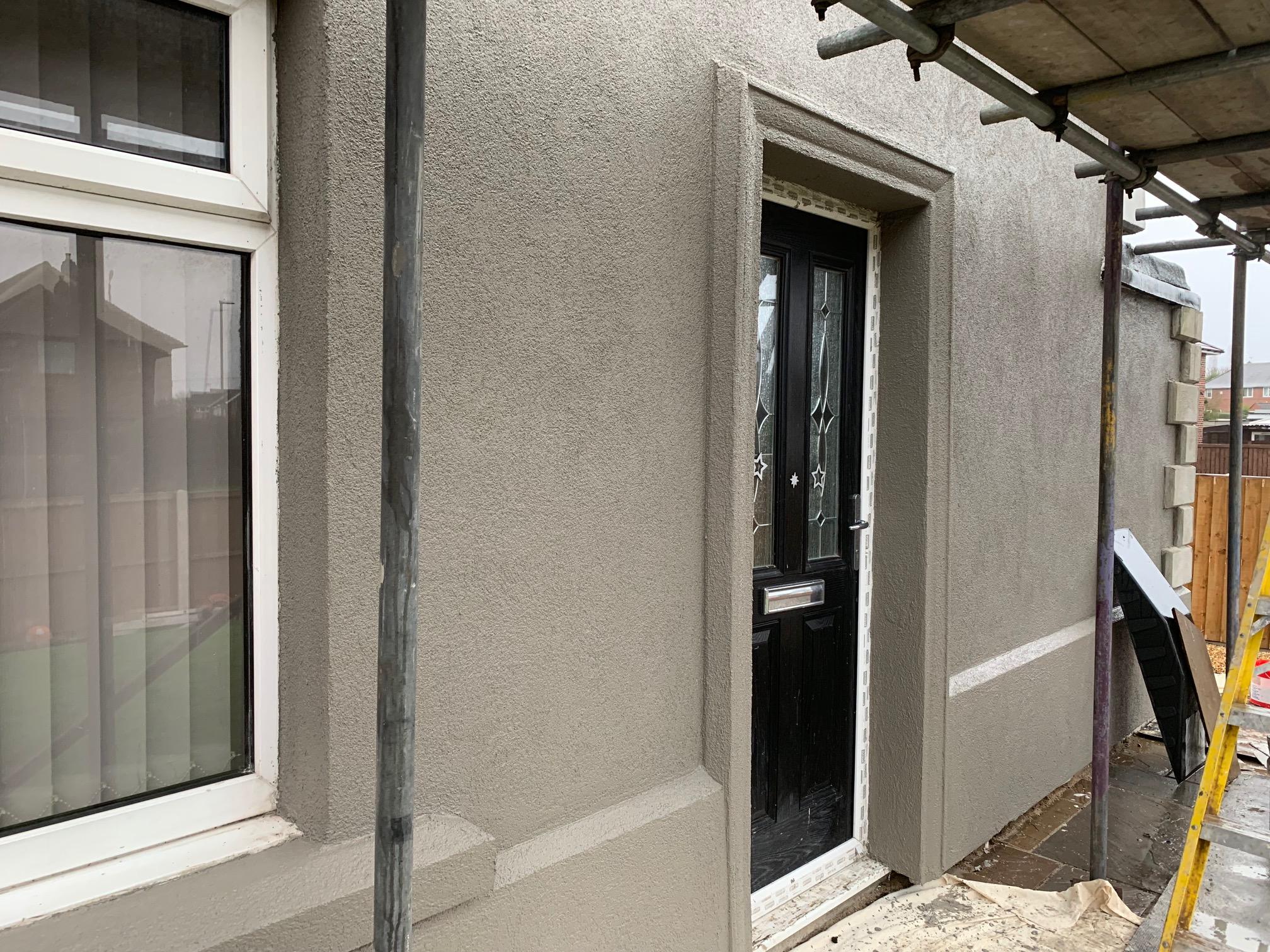
Internal plastering, external rendering and pebbledash removal across Greater Manchester. Whether you need a single room re-skimmed, a full house replastered after a renovation, or a Victorian terrace stripped of pebbledash and finished in modern silicone render — we quote every job in writing, fix the price and get it right first time.
Send us the job — we'll price it and call you back same day
Plastering in Manchester costs £180–£900 per room (skim from £180, full re-plaster £380–£900), while external rendering runs £28–£70 per m² depending on system: sand-and-cement from £28/m², K-render £38–£48/m², and silicone render £55–£70/m². All prices are fixed and written before work starts.
Plastering is one of the most visible trades in any renovation — and one of the easiest to get visibly wrong. Waves, hollows, trowel marks and cracks that appear within six months are all signs of rushed preparation or the wrong mix applied in the wrong conditions. Greater Manchester's Victorian and Edwardian properties present a specific challenge: original lime mortar backgrounds require lime-compatible undercoats, original lath-and-plaster ceilings need a different approach entirely, and the region's damp climate means poorly prepared external renders fail faster here than in many other parts of the country.
Our plasterers work across the full range — internal skim on new plasterboard, full sand-and-cement browning on damaged walls, lime plaster on pre-1920 properties in Chorlton and Levenshulme, and external rendering from K-render and monocouche through to premium silicone systems that come with manufacturer-backed guarantees. Every job is quoted in writing. No day-rate discussions on site, no materials charged separately without prior agreement.
Plastering and rendering is also where we add most value as part of a larger renovation — our plasterers work directly alongside our builders, joiners and painters so there's no gap between trades and no waiting for walls to be ready before the next stage can start.
Two distinct disciplines that require different materials, preparation and drying conditions. We cover both, across all property types in Greater Manchester.
From a single ceiling skim after a leak to a full house replaster following a loft conversion or extension, our internal plasterers work cleanly, quickly and to a finish that takes paint without visible imperfections.
Manchester's climate is hard on external renders — freeze-thaw cycles, wind-driven rain from the west and prolonged damp all test a render system. We apply the right system for each substrate and exposure level, with no shortcuts on preparation.
The render system matters as much as the application. Here's how the main options compare on durability, appearance and suitability for Greater Manchester's climate and housing stock.
The best-performing render system for Manchester's wet climate. Silicone is inherently hydrophobic — water beads off the surface rather than soaking in — while remaining vapour-permeable, so trapped moisture can still escape from the wall. Colour is manufactured into the silicone so it never needs painting. 25-year colour guarantee from leading manufacturers.
Polymer-modified renders that are applied in a single or two-coat system, available in smooth or textured finishes and a wide range of through-colours. K-render is the most widely used render system across Manchester's 1930s and post-war housing stock. More affordable than silicone while still significantly outperforming traditional sand-and-cement. Lifespan of 15–20 years with correct preparation.
The correct choice for Manchester's Victorian and Edwardian housing stock. Lime render is breathable — moisture can move through the wall as it did when the house was built. Applying a cement-based render to a lime-built Victorian terrace traps moisture and causes long-term damage to the original brick. We specify lime render for pre-1920 properties in Chorlton, Withington, Levenshulme and Didsbury.
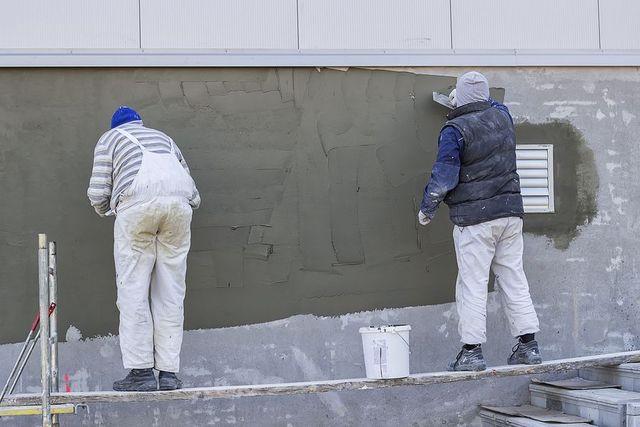
The traditional two-coat system — a scratch coat followed by a finish coat, typically painted. More rigid than polymer systems and less tolerant of wall movement. Suitable for post-war concrete block construction and commercial buildings, but not recommended for solid brick Victorian walls. Lowest initial cost but typically requires repainting every 5–7 years.
Manchester has thousands of homes clad in mid-20th century pebbledash that owners want removed. Hacking off pebbledash correctly — without damaging the underlying brick — requires skill and patience. Done wrong, you're left with a wall that can't hold a new render. We remove pebbledash, repair any brick damage and apply your chosen finish system in a single contracted package.
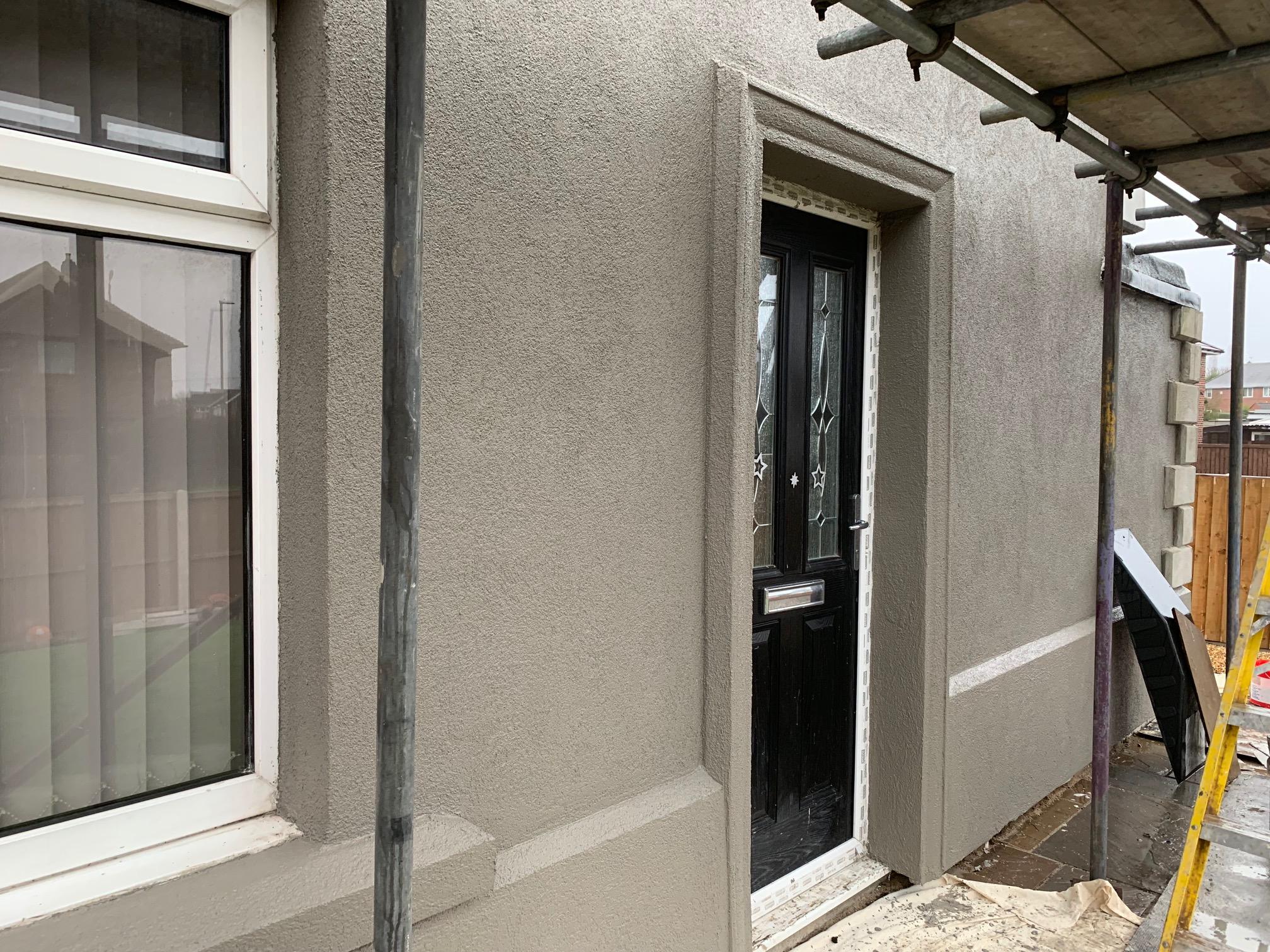
External Wall Insulation (EWI) systems fix rigid insulation boards to the outer wall and finish with a thin-coat silicone or acrylic render. Particularly relevant for Manchester's solid-walled Victorian terraces where there's no cavity to fill and internal insulation would reduce room size. EWI can dramatically reduce heating bills and may qualify for government grant funding under ECO4.
Manchester has more pebbledash-covered properties than almost any other major UK city. Removing it correctly is skilled work — here's how we do it.
Before
After
Pebbledash was applied to Manchester's semi-detached stock from the 1920s through to the 1970s. In most cases it was applied directly to the original brick — and over time the bond between the pebbledash and brick weathers differently to the brick itself. Removing it without pulling facing bricks or mortar requires a methodical hand-hacking approach using bolsters and chisels, not grinders or mechanical hammers that vibrate the wall and cause deeper damage.
Once removed, the brick face often needs repointing, any spalled or damaged bricks replaced and a bonding coat applied before the new render system goes on. Skipping any of these steps is why pebbledash removal jobs done cheaply often result in new render that cracks and delaminated within two or three years.
The same process whether you're skimming one room or rendering a full house exterior.
We visit and assess wall conditions — checking for damp, damage, previous repairs or incompatible previous coatings. You receive a fully written, fixed-price quote. Internal plastering quotes typically issued same day. External render quotes within 24 hours of survey.
Same day / 24 hoursThe step most plasterers rush and most problems come from. Internal: walls hacked back to sound plaster or brick where required, damp treated, dubbing-out applied where walls are uneven. External: existing render or pebbledash removed, cracks cut back, brick repaired and bonding coat applied. Preparation time is priced into your quote — not charged separately.
Before any plaster or render is appliedInternal: browning coat or dot-and-dab plasterboard where required, followed by skim finish. Drying times respected — we do not apply skim too early or expose walls to excessive heat. External: render coats applied to manufacturer specification with correct timing between coats. Beading and trim fitted before rendering begins, not added afterwards.
1–5 days depending on scopeAll dust sheets, protective film and scaffold removed. Floors and surfaces left clean. Internal plastering handed over paint-ready — no lumps or ridges in the finish. External rendering inspected for consistency of texture, even colour and correct detailing at all edges. Five-year workmanship guarantee issued on completion.
Guaranteed for 5 yearsTransparent price ranges from 1,200+ rooms plastered and thousands of square metres rendered across Greater Manchester.
All prices include materials and labour. Whole-house discounts apply. Contact us for a full house quote →
Plastering & Rendering Across Greater Manchester
Get a free, fixed-price quote for any plastering or rendering job across Greater Manchester — from a single room to a full house exterior.